
When it comes to APS-C zoom lenses for the Sony a6700, two major contenders stand out:
• Sony 16-55mm f/2.8 G – Sony’s flagship APS-C zoom lens
• Sigma 18-50mm f/2.8 DC DN – A compact, affordable alternative
Both lenses are constant f/2.8 zooms, making them ideal for low light, portraits, street photography, and general everyday use. But the question is: Is the Sigma 18-50mm a budget-friendly giant killer, or does the Sony 16-55mm justify its premium price?
Let’s break it down.
Size & Build Quality: Sigma’s Compact Advantage
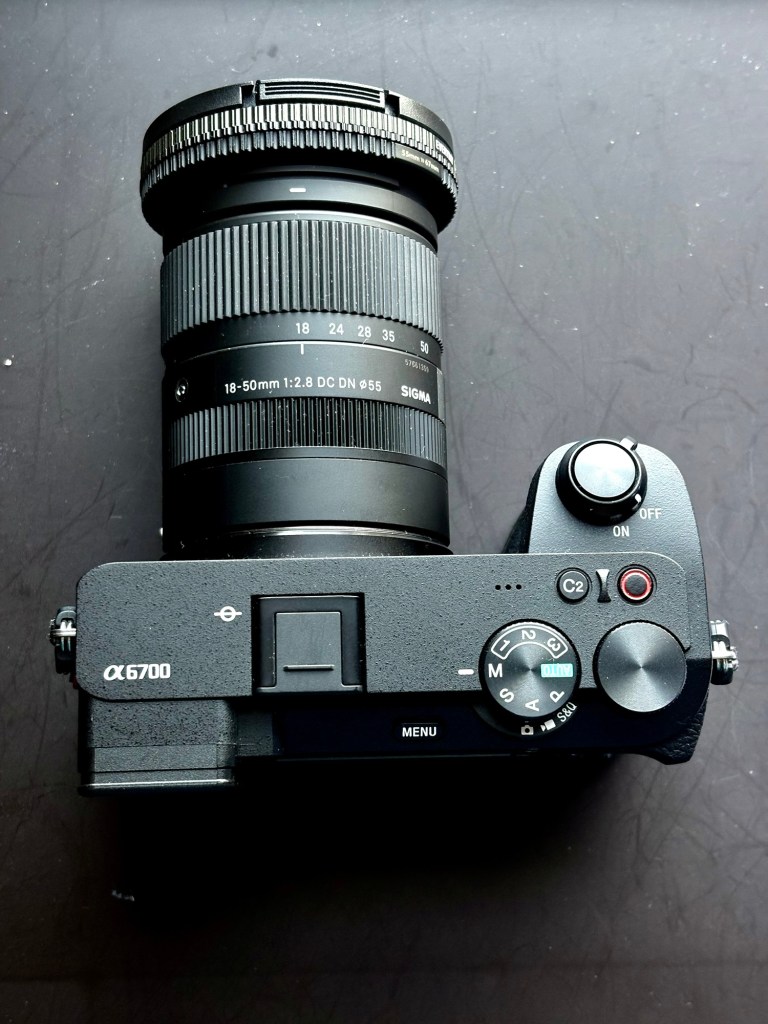
One of the biggest selling points of the Sigma 18-50mm f/2.8 is its size. Weighing just 290g (10.2 oz), it’s the smallest and lightest f/2.8 zoom lens for Sony APS-C cameras. In contrast, the Sony 16-55mm f/2.8 G weighs 494g (17.4 oz)—almost twice as heavy.
For travel, street photography, or anyone who prioritizes a lightweight setup, the Sigma wins hands down. It balances perfectly on the Sony a6700, making it a great everyday carry lens.
The Sony 16-55mm is larger and more robust, built to G lens standards with better weather sealing and a more premium feel. But that extra durability comes at the cost of size and weight.
Winner: Sigma 18-50mm (if portability matters)
Focal Range: Sony’s Wider Advantage
One key difference between these lenses is their focal range:
• Sony: 16-55mm (24-82.5mm full-frame equivalent)
• Sigma: 18-50mm (27-75mm full-frame equivalent)
That extra 2mm on the wide end gives Sony a real advantage, especially for landscapes, architecture, and tight indoor spaces. The 55mm vs. 50mm on the long end isn’t as noticeable, but 16mm vs. 18mm definitely is.
If you shoot a lot of wider scenes, Sony’s 16mm starting point is a big advantage.
Winner: Sony 16-55mm (for wider framing flexibility)
Sharpness & Optical Quality: Sony Takes the Edge
Both lenses deliver excellent sharpness, but the Sony 16-55mm f/2.8 G is sharper across the frame, especially in the corners.
At f/2.8, the Sigma is sharp in the center but slightly softer toward the edges. The Sony maintains sharpness more consistently across the frame, making it better for detailed landscapes and high-resolution shots.
The Sony also has better contrast, richer colors, and less chromatic aberration, thanks to its higher-end optics. The Sigma isn’t bad—far from it—but Sony’s G lens coatings and optical design make a noticeable difference.
For general use, you may not see a huge difference, but if you crop a lot, print large, or pixel-peep, the Sony wins.
Winner: Sony 16-55mm (sharper overall)
Autofocus Performance: Sony is Flawless
Since Sony lenses are designed for Sony cameras, AF performance is always going to be better than third-party lenses.
The Sony 16-55mm f/2.8 G has flawless autofocus, taking full advantage of Sony’s Real-Time Eye AF, tracking, and video AF settings. It’s near-instant, silent, and extremely reliable.
The Sigma 18-50mm f/2.8 has very good autofocus, but it’s not quite as fast or as smooth in video mode. There can be slight hunting in low light, and it’s not as reliable for fast-moving subjects.
If video is a big part of your workflow, Sony is the safer choice.
Winner: Sony 16-55mm (better autofocus, especially for video)
Minimum Focus Distance: Sigma’s Secret Advantage
One huge advantage of the Sigma 18-50mm f/2.8 is its much shorter minimum focus distance:
• Sigma 18-50mm: 12cm (4.7 inches) at 18mm
• Sony 16-55mm: 33cm (13 inches) at 16mm
This makes the Sigma significantly better for close-up shots, giving it almost macro-like capabilities at the wide end. If you shoot products, food, or details, this is a game-changer.
While the Sony can focus close at 55mm, it doesn’t match Sigma’s wide-angle close-up ability.
Winner: Sigma 18-50mm (better for close-up shots)
Price & Value: Sigma Wins Big
• Sigma 18-50mm f/2.8: $549
• Sony 16-55mm f/2.8 G: $1,299
That’s a huge price gap—the Sony costs over twice as much as the Sigma.
For $549, the Sigma 18-50mm is an absolute steal. It offers great sharpness, a compact build, and solid autofocus for less than half the price of the Sony.
Winner: Sigma 18-50mm (best value)
Final Thoughts: Sony is Better, But Sigma is the Smart Buy
The Sony 16-55mm f/2.8 G is technically the better lens—sharper, wider, and with flawless autofocus. But at more than twice the price, is it worth it?
For most people, the Sigma 18-50mm f/2.8 is the smarter buy. It’s sharp, compact, and cheaper, with the added bonus of better close-up focusing.
If you want the absolute best, get the Sony. But if you want the best value APS-C zoom lens, Sigma wins.
My Choice: Sigma for Now, Sony in the Future
Right now, I own the Sigma 18-50mm f/2.8, and it’s been an incredible everyday lens. The size, sharpness, and price make it an easy recommendation.
But I’m saving up for the Sony 16-55mm f/2.8 G because those few extra advantages—better sharpness, wider 16mm focal length, and flawless autofocus—are things I personally need and want for my photography and videography.
For now, Sigma is more than enough. But eventually, Sony will be the long-term move.
 uncommonsight